
W.I.S.E Wednesday: Dr. Jennifer Leight, Professional Practice Associate Professor of Biomedical Engineering at OSU

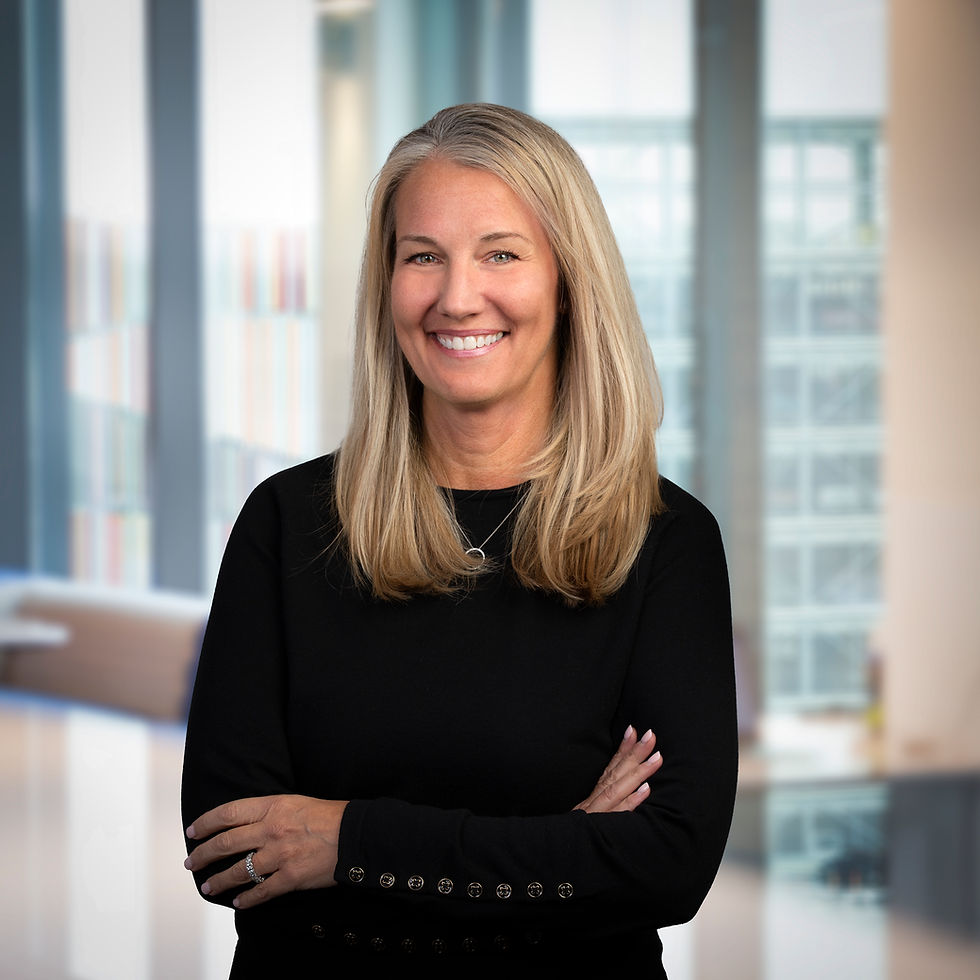
Dr. Jennifer Leight is a Professional Practice Associate Professor of Biomedical Engineering at The Ohio State University. Dr. Leight discusses her past research experiences such as highlighting her 2019 Pelotonia Idea Grant, and her passions for teaching. Additionally she deep dives into her motivation behind choosing a career in STEM, her challenges along the way, and shares some advice to students who aspire to pursue a STEM career.
Interview Transcript:
Question #1: Can you please introduce yourself and your professional and academic journey as well?
My name is Dr. Jennifer Leight, and I’m a Professional Practice Associate Professor of Biomedical Engineering at The Ohio State University. I started my academic journey at Tulane University, where I majored in Biomedical Engineering as an undergraduate. From there, I went on to pursue my Ph.D. in Bioengineering at the University of Pennsylvania. Post Ph.D, I continued to work as a postdoctoral research associate at the University of Colorado Boulder.
My research focused on developing engineered systems to study breast cancer cells. I was particularly interested in how the environment around these cells such as how tissue stiffness can influence how the disease progresses and how it responds to different treatments. We looked closely at how those physical changes in the tissue impact cellular behavior and treatment outcomes.
I joined the faculty here at Ohio State in 2014 and have been here ever since. It’s been a great place to continue exploring the intersection of engineering and cancer biology, and to work with students who are passionate about using technology to solve real-world health challenges.
Question #2: What inspired you to pursue your path in STEM as well as teaching?
I’ve always been good at math and science, so engineering seemed like the natural path but I actually tried to resist it at first. When I started college, I was undecided and spent some time exploring different subjects. No matter what I tried, I kept finding myself drawn back to biomedical engineering. It was the field that made the most sense to me—it combined my interest in science with real-world applications in healthcare.
Initially, I was focused on getting a job right out of college, and engineering felt like a practical way to do that. But I’ve also always had a passion for teaching. One of my first jobs in high school was teaching swim lessons, and I genuinely enjoyed it. That experience stayed with me.
When I eventually came back to teaching through my faculty role at Ohio State, I realized how much I loved being in the classroom and working with students. It brought everything full circle for me—combining my technical background with something I’ve always found fulfilling. That’s when I knew I really wanted to stay on this path.
Question #3: What is tissue engineering? How would you describe bioengineering or biomaterials to someone that is unaware of the study?
That’s a great question. In simple terms, bioengineering is all about applying engineering principles to solve problems in biology and medicine. When we talk about biomaterials, we’re referring to materials that are used in biological systems whether that’s inside the body or in a lab setting.
In my research, we work with a variety of materials and tailor them to mimic the properties of human tissues. For example, one of the common signs of cancer is a lump, which usually forms because the tissue becomes stiffer. So in the lab, we try to recreate that by designing materials with different levels of stiffness: some soft, some stiff. We then study how cancer cells behave in each environment.
With bioengineering, researchers use either human or animal cells and grow them within these materials to observe how they move, grow, and respond to treatments. It gives us a way to model disease outside the body and helps us understand how the physical environment can influence disease progression and therapy outcomes. It’s like building a mini tissue model in the lab to better study what’s happening inside the body.
Question #4: What do you enjoy most about teaching at OSU?
What I enjoy most is definitely the students. I love getting to interact with them, especially when they get excited about something we’re covering in class. There’s something really rewarding about seeing their faces light up when a concept clicks or when they connect with a topic– it gets me excited too.
I really enjoy helping students along their journey, which is one of the reasons I teach professional development courses. It gives me a chance to expose them to the wide range of opportunities in biomedical engineering—whether it’s research, industry, clinical applications, or something entirely different.
What I also love about teaching is the immediate impact. You can see in real time that students are learning, growing, and figuring out what they’re passionate about. Being a part of that process is incredibly meaningful to me.
Question #5: Throughout your academic and professional journey, have you faced any challenges? How did you overcome them?
Absolutely. I think most people face challenges along the way, and one that stands out for me happened during my very first year of undergrad. I took a really tough math class that was a mix of Calculus II, Calculus III, and an honors math track all rolled into one. It was intense, and I struggled. I didn’t get good grades, failed a couple of tests, and it really shook me because I had always done well in school up to that point.
I remember questioning if I could actually do this. It was one of those moments where I genuinely wondered if engineering was the right path for me.
However I overcame that by going to office hours regularly, asked for help when I needed it, and spent a lot of time doing practice problems. Slowly but surely, I improved. Looking back, it may seem like a small hurdle, but it was a pivotal moment. It challenged my confidence, but it also taught me the importance of persistence and reaching out for support when things get tough.
Question #6: Have you ever felt excluded or underrepresented in your field? How did you navigate that?
I feel very fortunate in that regard. I believe biomedical engineering is one of the engineering disciplines where there tends to be a relatively high number of women, so I’ve never really felt significantly underrepresented in my field as a whole.
That said, there have been moments, especially in team settings, where I was subtly given more gendered roles like being asked to take notes or handle organizational tasks. While those roles are important, I was mindful about not getting boxed into them. I made an effort to rotate responsibilities within teams and also made sure I was stepping into leadership roles when I could. It was important to me to contribute in a way that matched my skills and goals, and not just what was assumed of me.
More broadly, I do think women are still underrepresented in research and clinical testing. That’s an area where we’re seeing positive change—more awareness, more diversity in study models. I’m really glad to see that shift happening. It's an ongoing process, but we're moving in the right direction.
Question #7: What is one piece of advice you would tell someone who lacks the confidence to pursue a career similar to yours?
I would say start by tapping into what you already know about yourself. What are you passionate about? What brings you joy? And how might that connect to a career in STEM? Sometimes just reminding yourself why you were drawn to this path in the first place can help reignite your motivation and build your confidence.
If you care deeply about helping people, protecting the environment, or solving complex problems, those are all incredibly valuable drivers for a career in STEM. And the truth is you don’t have to be naturally good at math or science to succeed. These are skills you can build, just like learning a sport or how to ride a bike. It takes practice, strategy, and support.
The most important thing is to hold on to your passion. That’s what will keep you going when things get tough. Confidence doesn’t come all at once however it builds over time as you keep showing up, putting in the effort, and recognizing that you belong here just as much as anyone else.


Comments